
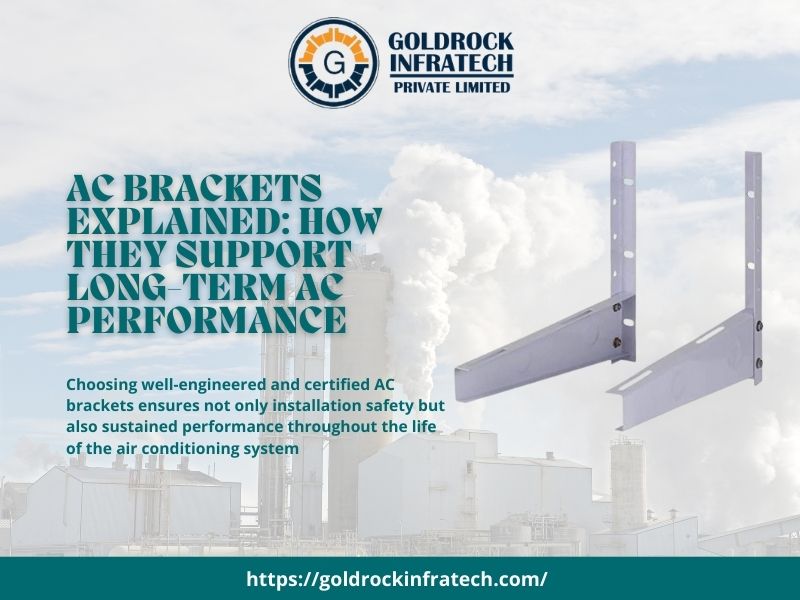
Air conditioning systems are designed to operate continuously under varying environmental and load conditions. While much focus is placed on the efficiency and capacity of the air conditioner itself, the supporting hardware—particularly AC brackets—plays a critical role in ensuring consistent and long-term performance. Properly designed AC brackets provide structural stability, reduce operational stress, and help maintain optimal functioning throughout the lifespan of the system.
The Functional Role of AC Brackets
AC brackets are structural components used to securely mount outdoor condenser units on walls or external surfaces. Their primary function is to support the weight of the AC unit while maintaining correct alignment and balance. When engineered correctly, AC brackets ensure that the unit remains stable during operation, even in the face of continuous vibration and environmental exposure.
Stable mounting has a direct impact on the efficiency of an air conditioner over time.
Load Distribution and Structural Stability
One of the most important contributions of AC brackets is proper load distribution. Outdoor units are heavy and generate dynamic loads during operation. Poorly designed or under-rated brackets can bend, loosen, or shift, placing uneven stress on the unit.
Well-engineered AC brackets are designed to:
- Support the full operational weight of the unit
- Distribute load evenly across mounting points
- Maintain alignment under long-term use
This structural stability prevents gradual performance degradation caused by misalignment or physical stress.
Vibration Control and Performance Consistency
Air conditioning systems generate vibrations during normal operation. If these vibrations are not controlled, they can accelerate wear on internal components such as compressors, fans, and piping.
High-quality AC brackets help minimize vibration transfer by:
- Providing rigid and balanced support
- Allowing compatibility with vibration-damping pads
- Preventing metal fatigue in mounting points
Reduced vibration contributes to quieter operation and helps maintain consistent cooling performance over time.
Impact on Compressor Health
The compressor is one of the most critical and sensitive components of an air conditioning system. Improper mounting caused by weak or unstable brackets can affect oil circulation and increase mechanical stress on the compressor.
By maintaining proper orientation and stability, AC brackets indirectly support:
- Smooth compressor operation
- Reduced mechanical strain
- Longer compressor service life
This directly impacts the overall longevity of the AC system.
Material Quality and Corrosion Resistance
Outdoor AC brackets are exposed to heat, moisture, dust, and environmental pollutants. Material quality plays a decisive role in how well the brackets perform over time.
Durable AC brackets are typically manufactured using:
- Galvanized steel or corrosion-resistant metal
- Uniform thickness to prevent bending
- Protective coatings to resist rust and surface degradation
Corrosion-resistant brackets maintain their load-bearing capacity and prevent structural weakening over long-term use.
Installation Accuracy and Alignment
Proper installation depends heavily on the precision of AC brackets. Accurate hole placement, consistent dimensions, and rigid construction simplify installation and reduce alignment errors.
Correct alignment ensures:
- Even weight distribution
- Reduced stress on refrigerant lines
- Optimal airflow around the outdoor unit
This precision helps the AC system perform efficiently and reduces the likelihood of installation-related performance issues.
Compliance with Standards and Certifications
Certified AC brackets are manufactured in accordance with recognized quality and safety standards. Compliance with certifications ensures that the brackets have been tested for load capacity, durability, and material consistency.
Common compliance benchmarks include:
- Quality-controlled welding and finishing procedures
Certification assures that AC brackets are suitable for long-term, real-world use.
Long-Term Cost and Maintenance Benefits
While AC brackets may seem like a minor component, their quality has a significant impact on maintenance costs. Reliable brackets reduce the need for frequent adjustments, replacements, or repairs.
Long-term benefits include:
- Lower maintenance frequency
- Reduced risk of unit failure
- Improved system lifespan
Over time, investing in well-engineered AC brackets results in better performance and lower operational costs.
Conclusion
AC brackets play a foundational role in supporting long-term AC performance. Through proper load distribution, vibration control, corrosion resistance, and precise alignment, they help maintain system efficiency and component health over time. Choosing well-engineered and certified AC brackets ensures not only installation safety but also sustained performance throughout the life of the air conditioning system