
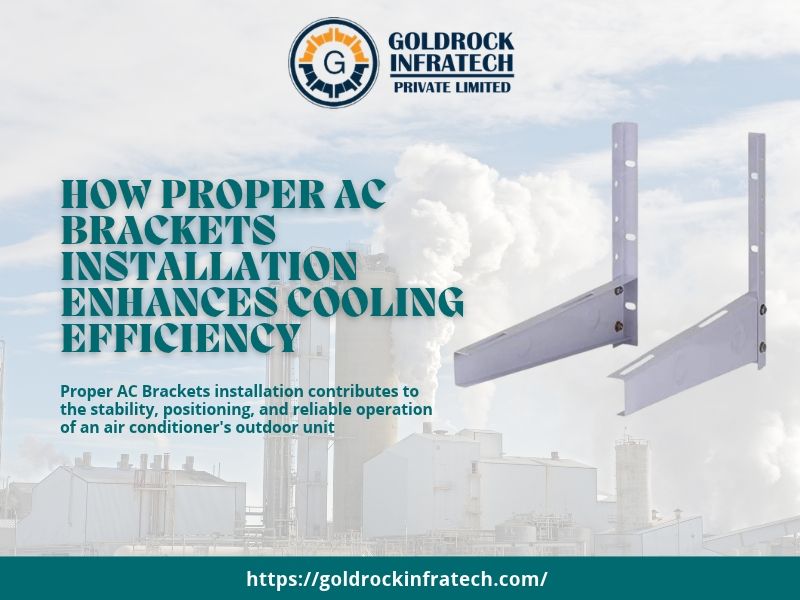
An air conditioner’s cooling efficiency depends on several factors, including compressor performance, airflow, refrigerant levels, insulation, and installation quality. However, the stability and positioning of the outdoor unit also play an important role in maintaining consistent operation. This is where properly installed AC Brackets become essential.
AC brackets provide structural support to the outdoor unit and help maintain its correct position. A secure installation can reduce unwanted movement, support proper airflow around the unit, and minimise vibration-related issues. Although brackets do not directly increase an air conditioner’s cooling capacity, they contribute to the stable operating conditions required for efficient performance.
1. Maintain Proper Outdoor Unit Positioning
The outdoor unit contains important components such as the compressor, condenser coil, and fan. Its positioning can influence airflow, heat dissipation, and overall system operation.
Properly installed AC Brackets help keep the outdoor unit stable and correctly positioned. An uneven or poorly supported installation may cause unwanted movement or place additional stress on mounting points.
Correct positioning also helps maintain the clearances recommended by the air conditioner manufacturer. Adequate space around the condenser allows outdoor air to circulate, helping the system release heat effectively.
When installing brackets, technicians should follow the manufacturer’s mounting requirements and ensure that the supporting structure can safely carry the unit’s weight.
2. Support Efficient Heat Dissipation
The outdoor unit releases heat removed from indoor spaces. For the air conditioning system to operate effectively, the condenser requires sufficient airflow to transfer this heat into the surrounding environment.
Incorrect positioning, restricted clearance, or an unstable installation can interfere with the outdoor unit’s operating conditions.
Suitable AC Brackets help maintain the intended mounting position and provide a stable support arrangement. When combined with adequate clearance and correct installation, they help ensure that the condenser has the space required for effective heat exchange.
It is important to remember that brackets alone cannot correct poor ventilation, blocked condenser coils, or other airflow problems. These factors must also be addressed during installation and maintenance.
3. Reduce Unwanted Vibration and Movement
Outdoor AC units generate vibration during operation because of the compressor and fan. If the mounting arrangement is weak or improperly installed, this vibration may become more noticeable.
A properly selected and secured bracket system helps support the unit and reduce unnecessary movement. Appropriate mounting hardware, correct alignment, and suitable structural support are essential for achieving a stable installation.
Vibration-control measures may also include suitable anti-vibration pads or isolation components, depending on the equipment design and manufacturer’s recommendations.
Reducing excessive movement helps limit mechanical stress on mounting points and may prevent avoidable noise-related complaints.
4. Help Maintain the Outdoor Unit’s Structural Stability
Outdoor units are exposed to environmental conditions such as rain, wind, temperature changes, and dust. Their mounting systems must therefore provide dependable support under the conditions expected at the installation site.
High-quality AC Brackets should be selected according to the outdoor unit’s dimensions, weight, and mounting requirements. The wall or floor supporting the brackets must also have sufficient structural strength.
A secure mounting arrangement helps keep the unit in its intended position and reduces the risk of instability caused by inadequate support.
For installations where wall mounting is unsuitable, a properly designed floor bracket may provide an alternative, provided it meets the equipment manufacturer’s requirements and site conditions.
5. Prevent Installation-Related Performance Problems
Incorrect bracket installation can create several problems that affect the overall operation of an air conditioning system.
Common installation mistakes include:
- Using brackets that are unsuitable for the outdoor unit’s weight.
- Installing brackets on weak or damaged supporting surfaces.
- Using incorrect fasteners or inadequate anchoring.
- Failing to check horizontal alignment.
- Ignoring the manufacturer’s recommended clearance around the unit.
- Leaving mounting bolts insufficiently tightened.
- Overlooking vibration and drainage considerations.
These mistakes may lead to instability, increased vibration, unnecessary mechanical stress, and restricted airflow.
Professional installation helps ensure that the mounting arrangement is suitable for the equipment and the surrounding structure.
6. Choose Materials Suitable for Outdoor Conditions
The material and finish of AC Brackets influence their ability to withstand outdoor exposure. Brackets installed outside may face moisture, humidity, temperature variations, and other environmental conditions that can contribute to corrosion.
Buyers should consider the material grade, thickness, surface treatment, load-bearing capacity, and overall manufacturing quality.
Protective finishes, such as galvanisation or suitable corrosion-resistant coatings, may help improve resistance to environmental exposure when correctly specified and maintained.
The choice should depend on the installation environment and the expected service conditions. A bracket designed for outdoor use is generally more appropriate than one intended only for protected indoor applications.
7. Ensure Correct Installation for Long-Term Performance
Proper installation is essential for getting the intended support from an AC bracket system. Even a well-manufactured bracket may not perform as expected if it is installed incorrectly.
A professional installation process should include:
Site assessment: Check the supporting wall or floor for structural suitability and identify potential installation challenges.
Bracket selection: Choose a bracket system compatible with the outdoor unit’s dimensions, weight, and mounting configuration.
Accurate alignment: Ensure that the brackets are positioned correctly and provide the required level of support.
Secure fastening: Use suitable fasteners and anchoring methods according to the manufacturer’s recommendations and supporting surface.
Clearance verification: Maintain the required space around the outdoor unit for airflow and servicing.
Final inspection: Check stability, fasteners, vibration, and the overall mounting arrangement before completing the installation.
Following these steps helps create a reliable foundation for the outdoor unit.
8. Understand the Connection Between Bracket Quality and Cooling Efficiency
Cooling efficiency is influenced by the complete air conditioning system rather than one individual component. Refrigerant condition, filter cleanliness, condenser maintenance, correct sizing, and installation quality all contribute to performance.
AC Brackets support the outdoor unit by maintaining stability and helping preserve the intended installation position. This can indirectly support efficient operation by reducing mounting-related problems and allowing the condenser to operate with appropriate clearance.
For this reason, bracket selection should be considered an important part of the overall installation process rather than a minor accessory decision.
Conclusion
Proper AC Brackets installation contributes to the stability, positioning, and reliable operation of an air conditioner’s outdoor unit. By providing suitable structural support, helping minimise unwanted movement, and maintaining the required clearance for airflow, correctly installed brackets support the conditions needed for effective cooling performance.
However, brackets alone cannot guarantee better cooling. Their benefits depend on correct selection, professional installation, adequate ventilation, and regular air conditioner maintenance. Choosing suitable brackets and following proper installation practices helps protect the outdoor unit and supports dependable long-term operation.